First Blog Post?
Chapters
Throughout the years of my software engineering journey, I had been sharing architectural insights, tutorials, and engineering strategies across company and public channels. For the public I relied on various platforms — ranging from Blogger.com, WordPress.com, Red Hat research blog and JBoss community forums to mainstream Dev.to and Medium. More recently I started publishing to the LeadDev community which focuses on high quality leadership content.
Publishing across multiple platforms over almost two decades, keeping track of your work gets complicated. I realized it was time to build a modest but centralized home that I can use as default space for more recurrent cadence and less polish (only American English ;) ).
Several of my older deep-dives on GraphQL performance and OpenAPI design strategies have organically become canonical references, accumulating over 11 million reads over a period of years and are still quoted on reddit despite being actively outdated in several aspects. I want to ensure those remain easily accessible to the community of people I work with or talk online about software industry etc. etd.
Why a blog?
I approach technical writing as a method for snapshotting my architectural thinking at a specific moment in time. It forces me to summarize my areas of expertise and creates a historical record of my industry predictions. I like to evaluate these past technical bets, lessons with the same scrutiny one might apply to a long-term investment portfolio — often finding gaps or seeing my thinking evolving as we progress with wider industry trends.
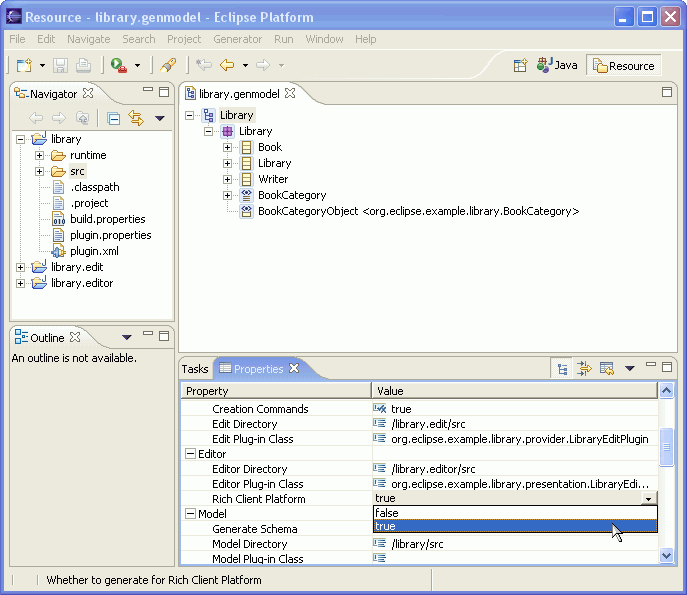
On the fun side, examining my track record gives me joy as some of my earliest technical convictions were confidently very badly placed ;). For example, during my early career as an open-source contributor, I spent years developing on top of the Eclipse IDE. At the time, I firmly believed that the future of enterprise software would be exclusively dominated by Eclipse-based client applications, all software engineers defining their data and requirements in UML and utilizing code generation to build end user experiences. I was equally passionate about the Google Web Toolkit actively building and contributing to the framework. Similarly spent significant time contributing to Apache Cordova to bridge the divide between web standards and native mobile capabilities.
The industry’s evolution took a decidedly different path, and those specific technologies no longer define the modern web. Even though the industry went in a completely different direction, building software with people with a strong focus on developer productivity made me the engineer I am today. Navigating the limitations of those early tools gave me the foundational context I use daily at (web)scale.
Place for “manual AI-less” craft
We are entering the industry hype where Large Language Models can instantly generate perfectly coherent technical summaries, choosing to write blog posts might seem a bit old-school. Many of my early blog posts (like github actions patterns) can be now conveniently generated and finetuned towards each person linking.

Blog posts are a space for me to write and comprehend wider topics manually, without summary, normalization or genericness we all are going to face in upcoming “AI everywhere” years. This will help me to keep distilling complex technical material with my own mind as a forced cognitive exercise.
We still teach kids handwriting and basic math to build core logic pathways in their brains. Similarly, the manual struggle of drafting an architectural thesis forces me to find the gaps in my own understanding, seek help or align with industry and teams I work with on the wider vision.
Writing is how I test the structural integrity of my ideas and share them with others.
The Objective
I’m not here to monetize an audience or build personal brand. It is a dedicated space to document my continuous learning, share operational transparency, and give back to the engineering teams I work with and the broader community of industry practitioners. I invite you to add the RSS feed.